Extra battery pack
An additional quick-change battery set for prepared ground operations.

E‑Cite Air · A division of E‑Cite Motors Group
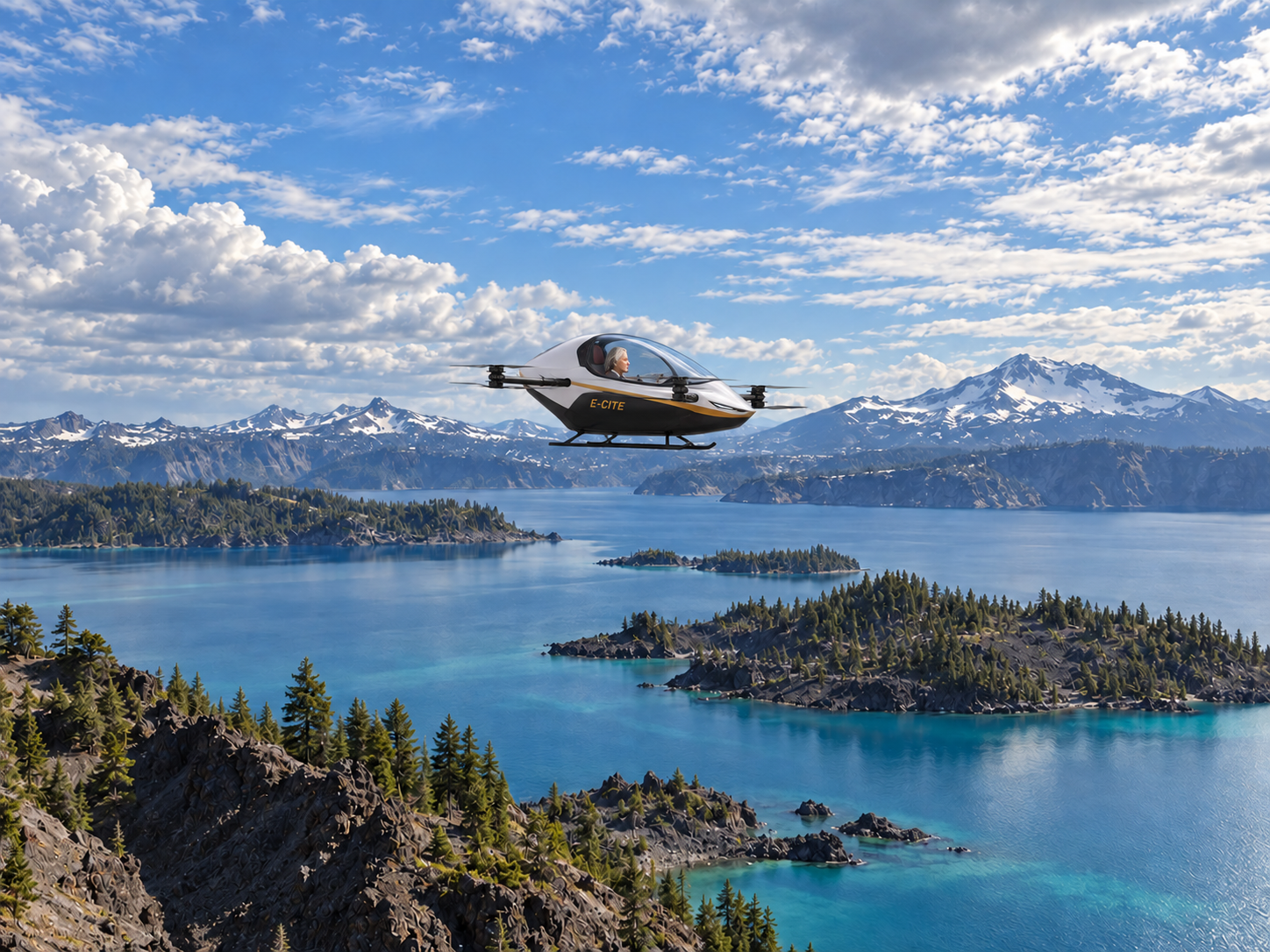
A proven single-seat aircraft, refined with premium E‑Cite design and flying today. A two-seat program planned for shared flight. A four-seat aircraft envisioned for the future.
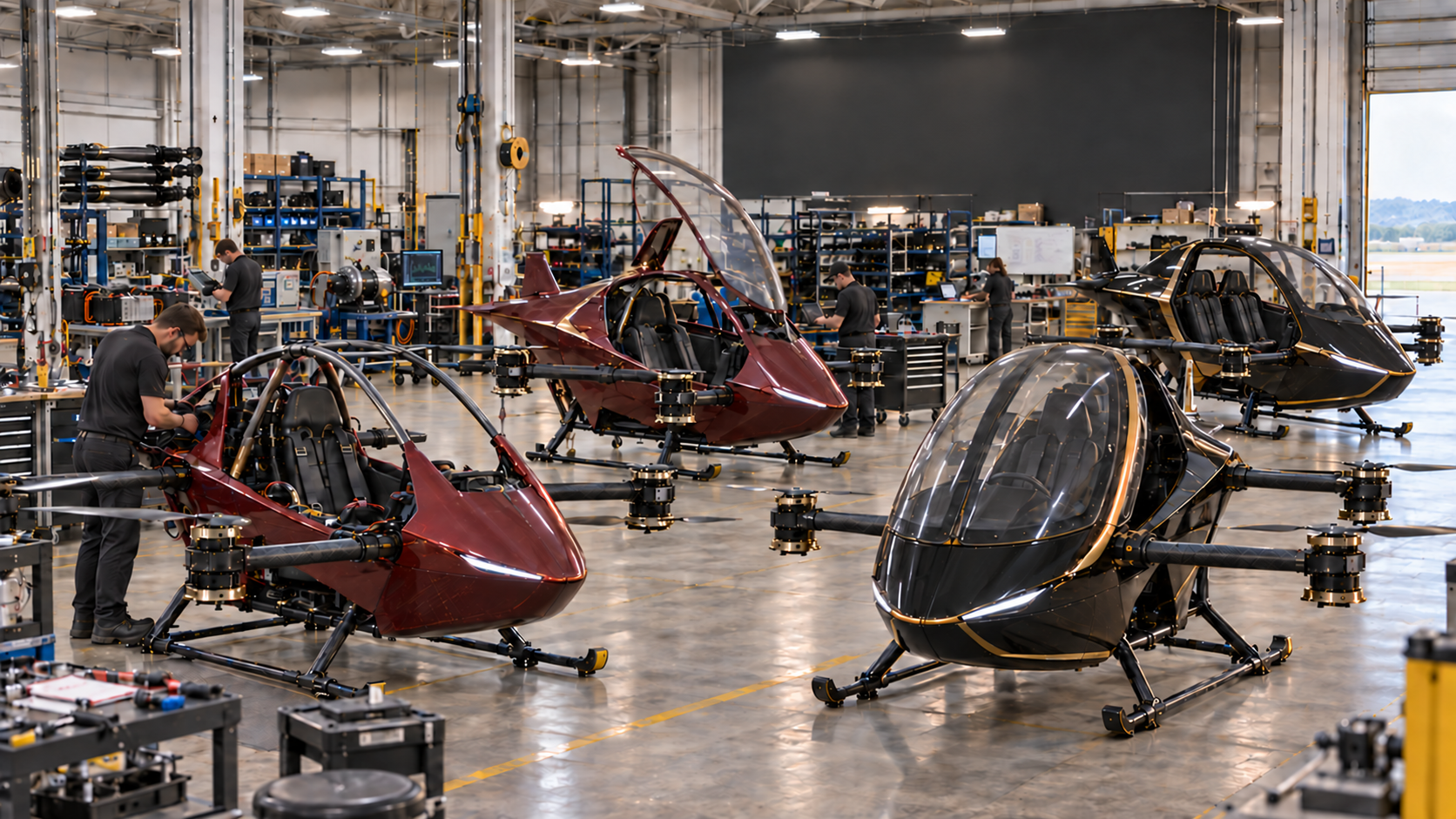
E‑Cite Ascent is flying today · Two-seat and four-seat imagery shows future programs
E‑Cite Air brings automotive intuition to vertical aviation. Redundant electric propulsion, simplified controls, and a compact footprint create an aircraft designed around the person in the seat, not the complexity of the machine.
Choose your aircraft
Aircraft flying today · Single seat
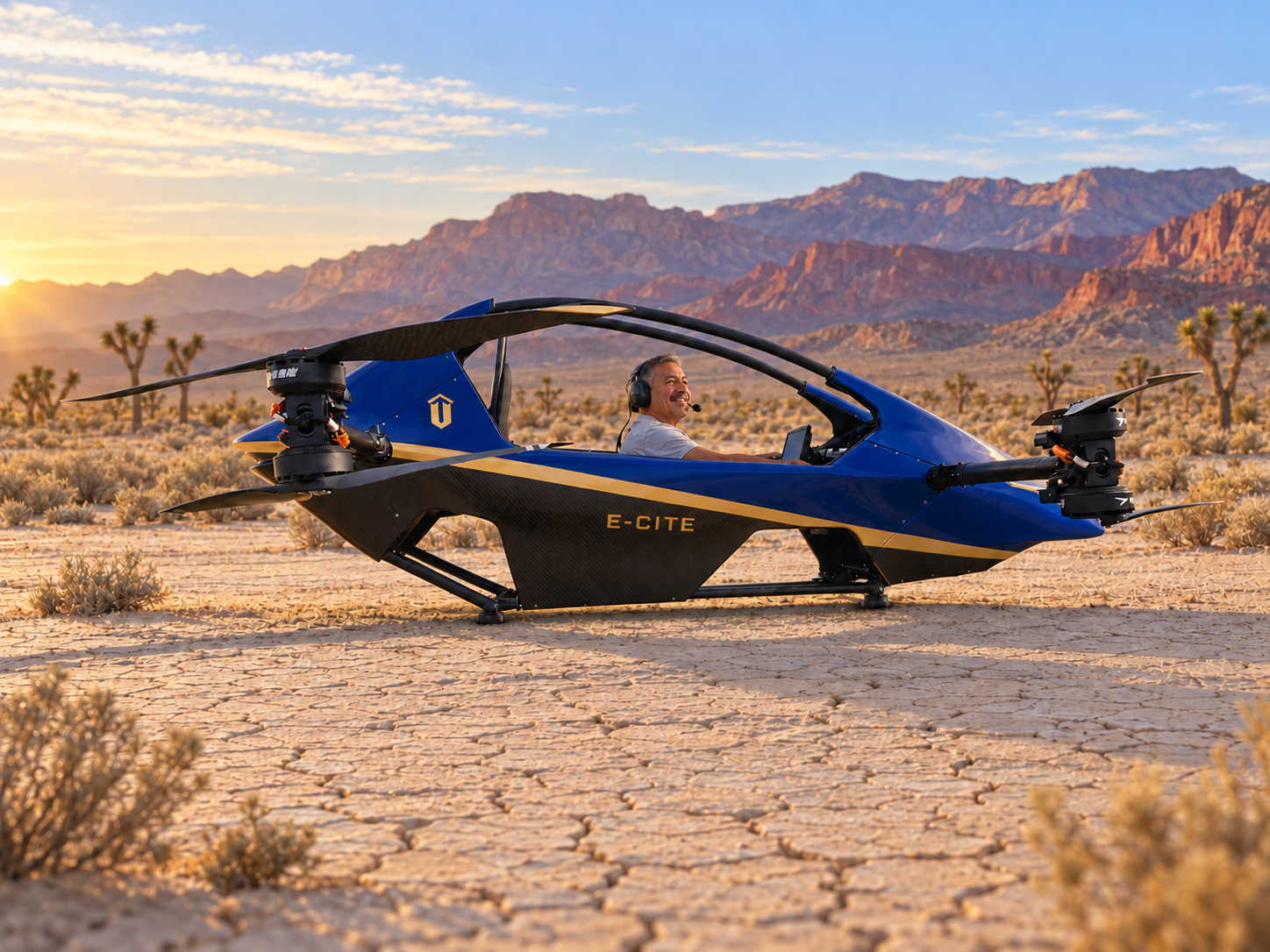
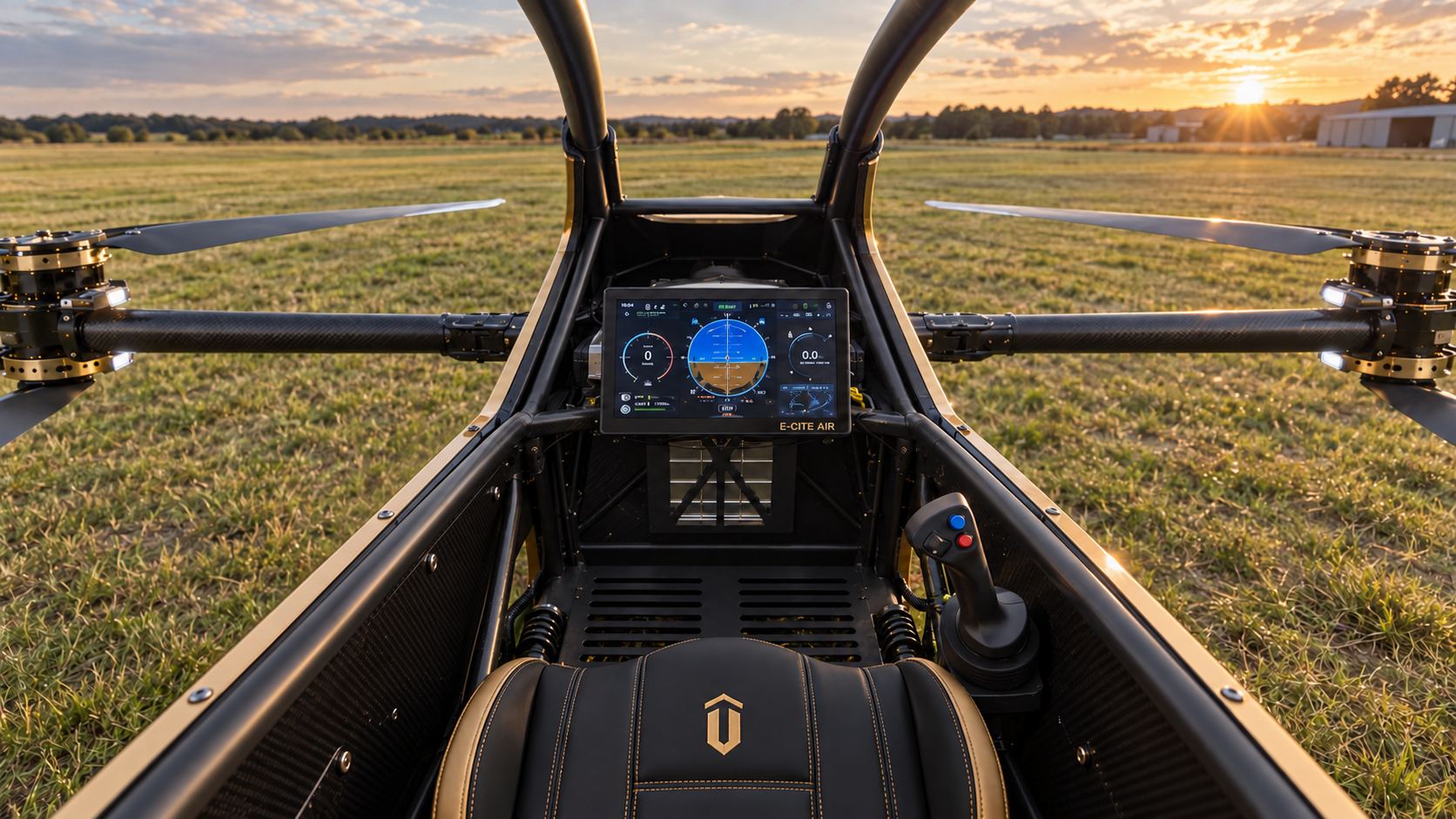
The current E‑Cite aircraft: a compact single-seat eVTOL built on a proven flight design with a titanium tube airframe, carbon-fiber body panels, four folding booms, coaxial electric propulsion, intelligent stabilization, and joystick control.
Performance varies by configuration, payload, weather, battery condition, and operating conditions.
Three expressions
The current single-seat aircraft is presented in three E‑Cite configurations. Future programs remain development concepts.
*Indicative base figures exclude E‑Cite configuration changes, freight, duties, taxes, options, training, and final program pricing. †Published platform mass is approximately 110 kg / 243 lb; final E‑Cite configured empty weight is not yet established. Published materials vary by edition, so the final controlled E‑Cite specification sheet will supersede these preliminary figures.
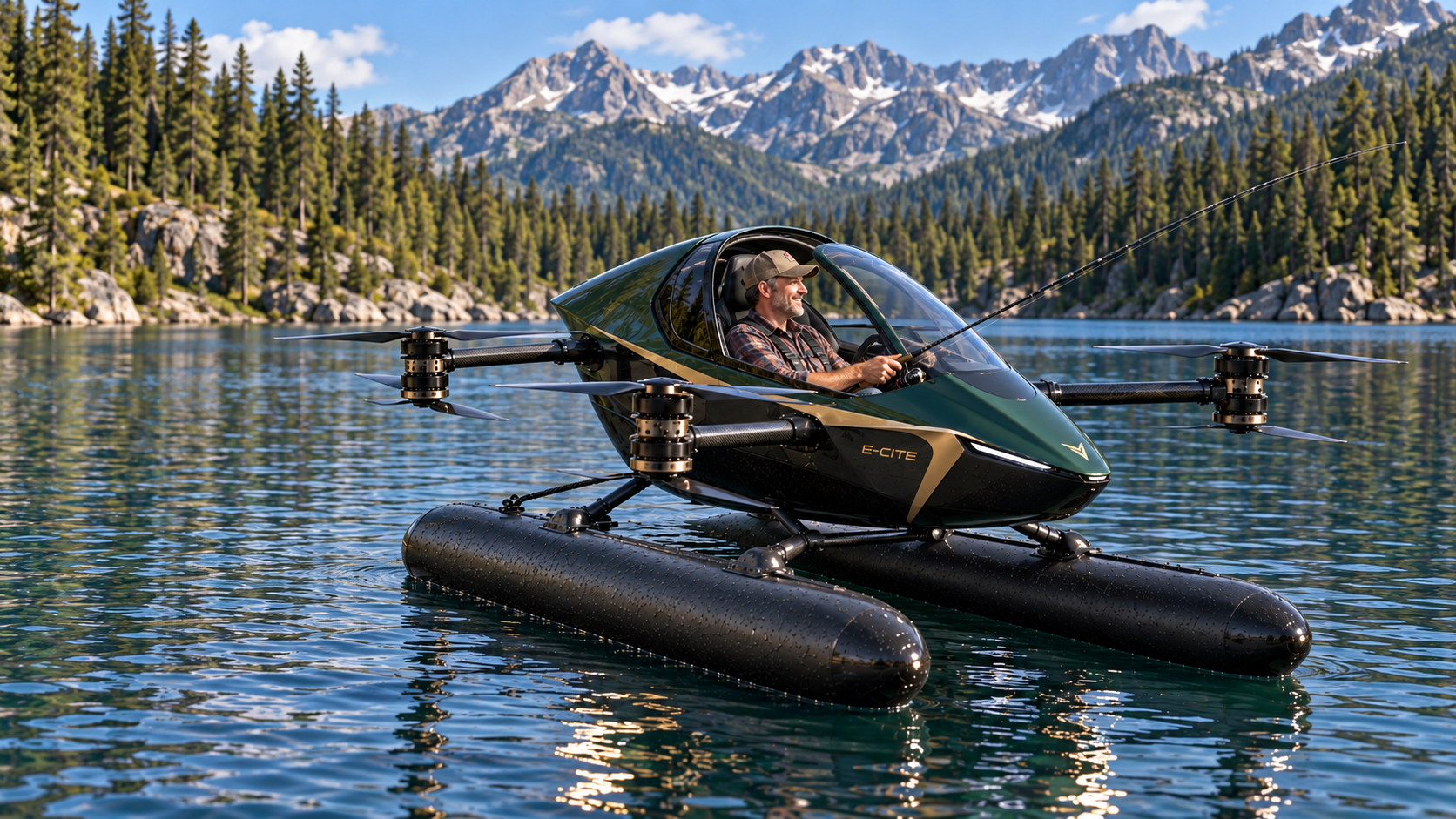
Water-ready configuration
A removable twin-pontoon package is being explored for water operations. Reinforced inflatable chambers and existing hard-point attachment preserve the shared E‑Cite Ascent frame with clean, rudder-free float profiles.
Safety by architecture
Safety is a system, not a feature. The E‑Cite Ascent architecture combines propulsion redundancy, real-time system monitoring, energy reserve logic, and intuitive flight controls.
Multiple independent drive units reduce single-point dependency.
Control software is designed to keep commands within the aircraft's validated operating envelope.
A whole-aircraft parachute and airbag recovery package is available for selected configurations.
A clearer path to the sky
Single occupant. Target empty weight below 115.2 kg / 254 lb excluding qualifying safety devices, maximum full-power speed at or below 55 knots (approximately 102 km/h / 63 mph), and operations within Part 103 limitations. No FAA pilot certificate is required, though professional training is strongly recommended.
Two seats total. Intended for certification as powered-lift under the FAA's modernized light-sport framework and operation by an appropriately rated pilot. Final privileges depend on aircraft approval, endorsements, and operating rules.
Four seats total. Conceived for FAA powered-lift type certification under the special-class process in §21.17(b), with aircraft-specific pilot qualification and operating requirements. Certification is a development objective, not a current approval.
The supplier platform is flying internationally; E‑Cite configuration and U.S. regulatory status remain under evaluation. Nothing on this site constitutes FAA approval, certification, or an offer for sale. Specifications and regulatory pathways may change.
Questions, answered
These answers organize the published technical information for the E‑Cite Ascent. Final specifications, support terms, pricing, and operating approvals depend on contract, configuration, and location.
It is a single-seat, manned ultralight eVTOL for recreation, exploration, training, and low-altitude experiences. Its core architecture combines a light titanium structure, carbon body panels, electronic stabilization, and intuitive flight controls.
The source platform includes a lighter 70 kg / 154 lb rated and 90 kg / 198 lb maximum-pilot entry configuration with a published 30-minute figure; 90 kg / 198 lb rated and 120 kg / 265 lb maximum-pilot configurations with published 30-minute figures; and a long-endurance 90 kg / 198 lb rated and 120 kg / 265 lb maximum-pilot configuration with a published 50-minute figure. E‑Cite currently presents Core, Touring, and LX expressions; final mapping and equipment are still being defined.
No. The aircraft takes off and lands vertically. Every site still requires adequate clearance, suitable surface conditions, permission to operate, and compliance with local airspace and operating rules.
The structure uses an extra-high-strength titanium tube airframe with carbon-fiber body panels. The four motor booms fold inward so the aircraft can be transported in a suitable pickup bed or van.
A multi-axis cockpit joystick manages climb, direction, and speed with continuous computer stabilization. The platform also supports operation from a ground-control station for supervised training and selected demonstration uses.
GPS-assisted mode provides automatic balancing and is intended to simplify stable flight. An advanced attitude mode reduces GPS assistance and requires the pilot to manage balance more directly; it is intended only for properly trained, experienced operators.
Published charging references are about one hour with 380 V / 70 A industrial power, about two hours with 220–230 V / 30 A service, and about three hours with 110–120 V / 15 A service. A prepared battery pack can be exchanged in approximately two minutes.
Published platform information describes multiple battery packs, motors, rotors, flight-control computers, and communication links to reduce single-point dependency. The motor and battery system is actively cooled, and optional airbag and whole-aircraft parachute equipment is available for selected configurations.
The supplier reports wind testing across steady and gusting conditions equivalent to Force 2 through Force 7, plus a single-motor-out demonstration intended to verify controlled flight and landing after partial propulsion loss. Operating limits are governed by the approved manual and training—not by a marketing test result.
No application or FAA signoff creates Part 103 status. A vehicle that actually satisfies every Part 103 requirement does not receive an airworthiness certificate, registration, N-number, or FAA design approval, and its operator does not need a pilot or medical certificate. The operator must still be able to demonstrate compliance if the FAA inspects it. For an electric vehicle, propulsion batteries count toward the 115.2 kg / 254 lb empty-weight limit. If the aircraft misses even one eligibility limit—including one occupant, recreation-only use, weight, 55-knot (approximately 102 km/h / 63 mph) maximum full-power speed, or 24-knot (approximately 44 km/h / 28 mph) maximum power-off stall speed—it is not a Part 103 ultralight and needs a different certification and registration path.
Training covers ground knowledge, basic flight principles, simulator work, supervised flight, emergency procedures, and local operating rules. Published delivery models include on-site instruction, online theory, and factory-based training; the available path depends on region and purchase terms.
The source program recommends initial low-altitude operation around 5–10 meters. Higher operation calls for advanced proficiency and additional safety equipment. Wind, temperature, visibility, time-of-day, terrain, and site limits are defined by the flight manual and instructor guidance.
Published supplier guidance estimates roughly one month from confirmed order to delivery, subject to production, destination, import, and logistics conditions. Aircraft, initial training, and after-sales support are generally included, while taxes, duties, freight, regional compliance work, and options are additional unless a quotation says otherwise.
Owners follow the inspection and scheduled-maintenance program in the aircraft manual. Published support includes technical assistance, software updates, component upgrades, parts guidance, and scheduled-maintenance help. The referenced platform warranty is 12 months from delivery, with final E‑Cite terms to be stated in the purchase agreement.
The single-seat aircraft is the platform flying and being delivered today. A two-person model has been identified for mid-term development. The E‑Cite 4 remains a longer-term future concept; neither should be represented as current production flight hardware.
Born from E‑Cite Motors
As a division of E‑Cite Motors, E‑Cite Air carries a belief across categories: transformative machines should be thrilling to use and beautiful to own. We are translating that mindset upward.
Discover E‑Cite Motors ↗
First in line
Join the flight list for development milestones, demonstration events, and early reservation access.